27 Oct 2026
The Role of Third-Party Audits in Maintaining Transparency Within Licensed Online Casino Environments
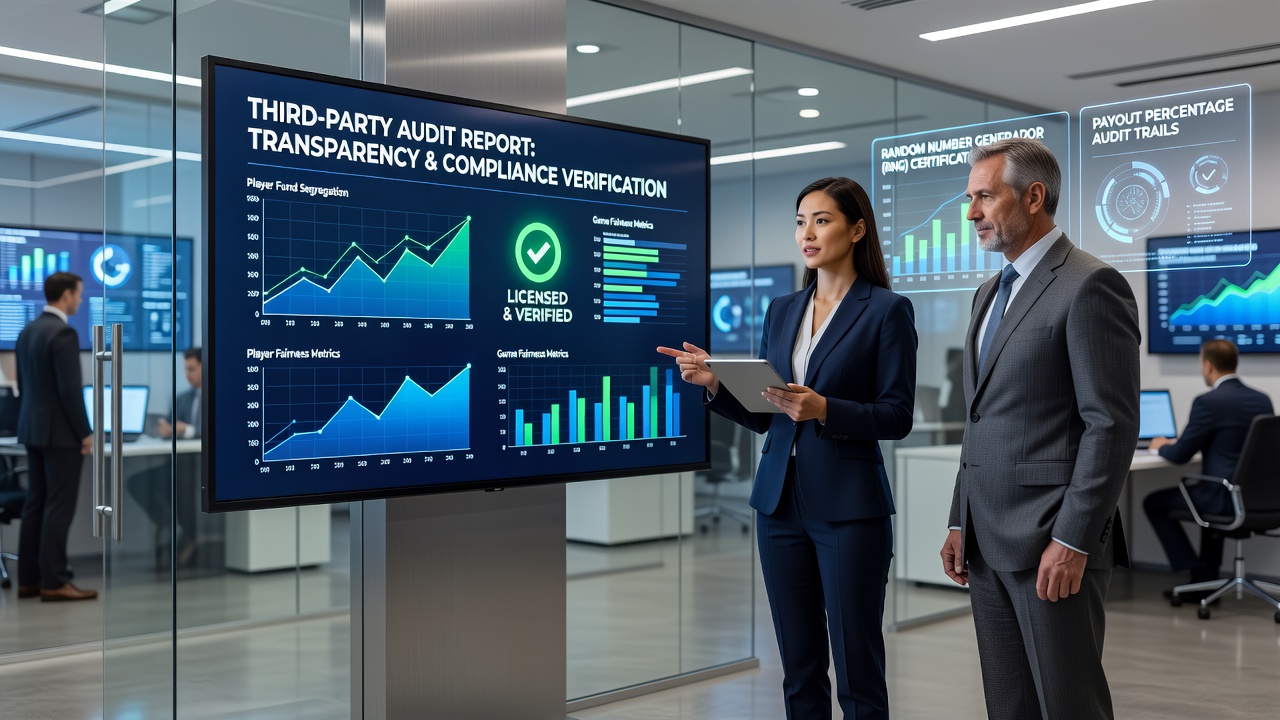
Third-party audits serve as independent verification mechanisms that licensed online casinos rely on to demonstrate operational integrity and regulatory compliance across multiple jurisdictions, and these evaluations cover everything from random number generator performance to financial reporting accuracy while operators prepare detailed records for external review teams. Regulators in various regions require such assessments at regular intervals because they provide documented evidence that platforms operate within established parameters rather than relying solely on internal self-reporting.
Core Components of Third-Party Audit Processes
Auditors examine random number generators to confirm statistical fairness in game outcomes, they review payment processing systems for accurate transaction handling, and they evaluate player data protection measures against prevailing security standards, all while cross-referencing operational logs with regulatory requirements that differ by licensing authority. These examinations typically occur quarterly or annually depending on jurisdiction size and license type, yet some operators undergo additional spot checks when volume spikes or new games launch.
Financial audits form another critical layer where independent firms reconcile player deposits and withdrawals against bank records, they verify that segregated accounts hold sufficient funds to cover liabilities, and they confirm tax reporting aligns with local rules, which helps maintain trust in environments where real-money transactions occur daily at high volumes.
Regulatory Frameworks Across Regions
Authorities such as the Malta Gaming Authority mandate periodic third-party reviews as a condition for license renewal, whereas the Gibraltar Regulatory Authority incorporates similar requirements into its oversight model, and both approaches emphasize documented proof of fairness and security rather than operator declarations alone. Data from these audits often feeds into public compliance reports that allow stakeholders to track patterns over time.
Observers note that Australian state regulators have expanded their expectations around audit scope in recent years, requiring more granular testing of live dealer interfaces and bonus calculation engines, while Canadian provincial bodies continue to refine their guidelines to address emerging payment methods like cryptocurrency wallets that introduce new variables into reconciliation processes.
One study released in 2025 highlighted how consistent third-party involvement correlates with fewer compliance incidents across sampled platforms, and the findings pointed to standardized testing protocols as a contributing factor that reduces discrepancies between reported and actual performance metrics.

Impact on Operational Transparency
Independent verification creates a layer of accountability that internal teams cannot replicate on their own, because external reviewers bring standardized methodologies and comparative benchmarks drawn from multiple clients, which allows them to identify anomalies that might otherwise go unnoticed within a single organization. Operators who publish summaries of these findings often see increased player engagement, since users gain access to concrete data about game fairness and payout percentages.
Certification bodies like eCOGRA and iTech Labs publish lists of approved platforms that have passed their criteria, and these directories serve as reference points for players seeking evidence of third-party oversight, although the depth of information varies depending on what each auditor chooses to disclose publicly. The European Gaming and Betting Association has compiled industry reports that track how audit frequency influences overall compliance rates across member companies.
What's interesting is how these processes have evolved to include real-time monitoring components in addition to periodic full audits, with some firms deploying continuous data feeds that flag irregularities as they occur rather than waiting for scheduled reviews, and this shift gained momentum following updates to several licensing regimes in 2024.
Developments Expected by October 2026
By October 2026 regulators in multiple jurisdictions plan to introduce enhanced audit templates that incorporate artificial intelligence-assisted anomaly detection, and early pilots suggest these tools can process larger datasets more efficiently while still requiring human oversight for final interpretations. Licensed operators are already adjusting their record-keeping practices to align with the anticipated formats, which include expanded fields for blockchain-based transaction trails and cross-border player verification steps.
Research indicates that platforms undergoing more frequent third-party assessments demonstrate stronger adherence to responsible gaming protocols, including self-exclusion list management and deposit limit enforcement, because the external review process surfaces gaps that internal teams might overlook during routine operations. Industry organizations continue to refine training programs for auditors so they stay current with evolving technology stacks used by casinos.
Conclusion
Third-party audits function as essential checkpoints that support regulatory oversight and player confidence in licensed online casino environments, they bridge the gap between operator claims and verifiable performance data, and they adapt over time to address new operational realities such as digital currency integration and advanced game mechanics. Continued refinement of these processes through 2026 and beyond will likely shape how transparency standards evolve across international markets.