10 Nov 2026
Demographic Shifts Driving Participation Patterns in Licensed Digital Wagering Sites
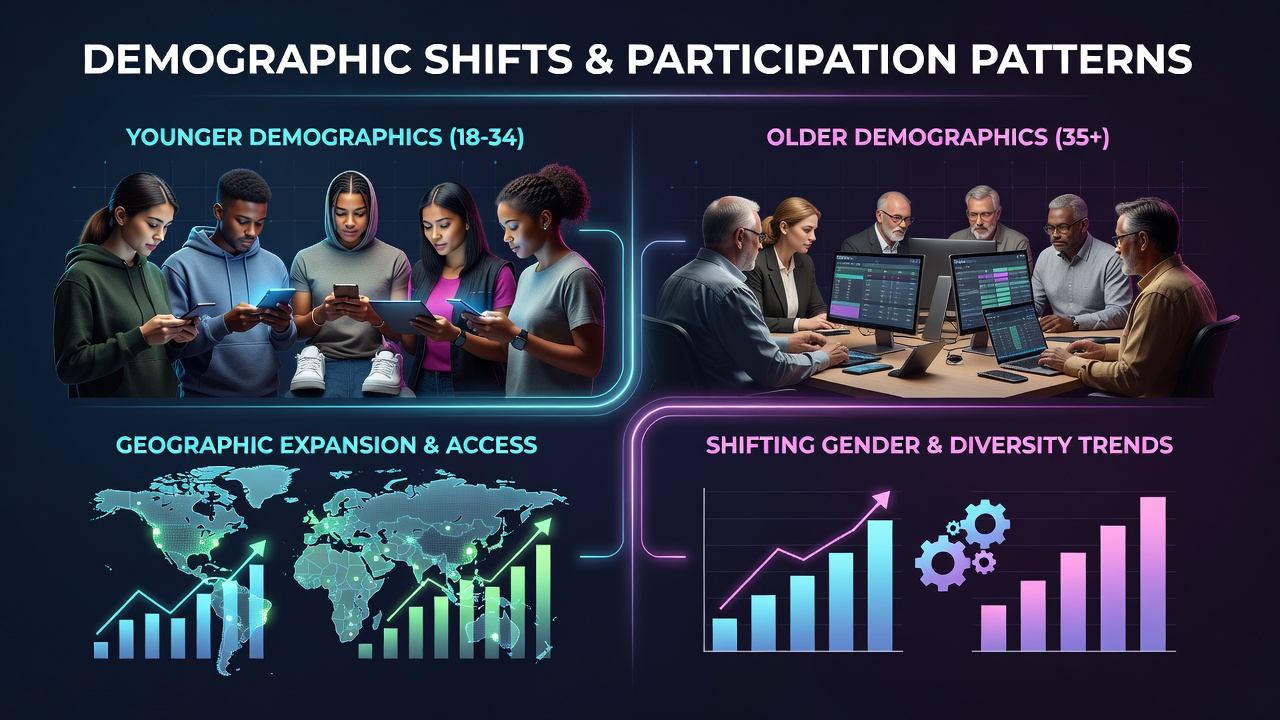
Demographic changes continue to reshape participation in licensed digital wagering sites across multiple jurisdictions, with data from regulatory bodies and industry reports tracking steady growth among younger adults and shifting gender balances. Researchers have noted that mobile accessibility combined with expanded legalization in places like several US states and Canadian provinces drives these patterns, while older age groups maintain steady but proportionally smaller shares.
Age-Based Participation Trends
Younger adults aged 21 to 35 now represent the largest segment of active users on licensed platforms according to aggregated figures from state regulators and research institutions. Studies compiled by the National Council on Problem Gambling indicate that this cohort favors sports betting interfaces and instant-play casino games accessed via smartphones, whereas participants over 55 tend toward table games and lottery-style options with longer session times. Data shows participation rates among 18-to-24-year-olds rising in markets where mobile apps became widely available after 2020, creating a clear divide in engagement styles across generations.
Observers note that college-educated users in urban areas participate at higher frequencies than rural counterparts, a pattern linked to broadband access and disposable income levels. Yet participation among middle-aged groups remains stable because many entered the market during early legalization waves and continue through established accounts.
Gender Dynamics in Digital Wagering
Female participation has increased steadily in licensed environments, with recent reports from the Alcohol and Gaming Commission of Ontario revealing that women now account for approximately 42 percent of new account registrations on regulated sites in that province. This shift coincides with expanded marketing of live dealer games and social features that appeal across genders, while male users still dominate sports betting volumes. Researchers tracking these trends point to targeted responsible gaming campaigns as one factor encouraging broader entry without altering overall spend patterns significantly.
International comparisons show similar movements in Australia where the Australian Gambling Research Centre documented rising female engagement in poker and bingo variants offered through licensed operators. These changes occur alongside regulatory updates that emphasize player verification and deposit limits, features that multiple demographic groups cite as influencing their decision to use legal platforms over unregulated alternatives.
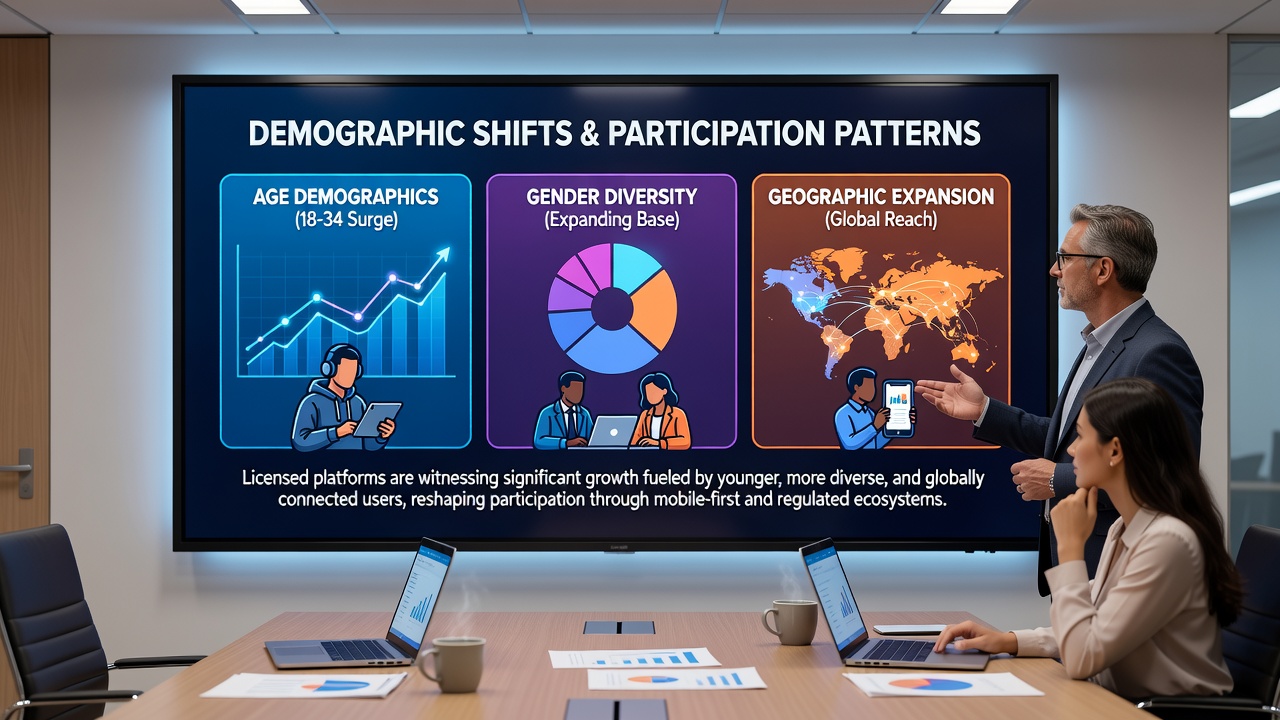
Geographic and Cultural Influences
Regional legalization timelines produce distinct participation spikes, particularly in US states that introduced sports betting after the 2018 Supreme Court decision. Participation in New Jersey and Pennsylvania climbed as licensing frameworks matured, drawing users who previously avoided offshore sites due to security concerns. In contrast, markets with longer-established frameworks such as those in parts of Europe display slower but more consistent growth rates tied to demographic stability rather than sudden influxes.
Cultural attitudes toward gambling also factor into these patterns, with data indicating higher uptake among populations where online transactions carry less stigma. Academic analyses from various universities highlight that trust in regulatory oversight correlates strongly with sustained participation across different age and income brackets.
Technology Access and Socioeconomic Factors
Smartphone penetration rates directly influence how demographic groups interact with licensed platforms, since many younger users complete registrations and place wagers entirely through apps. Socioeconomic data reveal that middle-income households participate more frequently than both lower and higher brackets, often citing convenience and promotional offers as entry points. Payment method preferences further segment users, with younger participants favoring digital wallets while older groups rely on bank transfers or cards.
November 2026 projections from industry monitoring services suggest continued expansion in these categories as additional jurisdictions finalize licensing rules and introduce localized app features. Participation metrics are expected to reflect ongoing adjustments in verification processes that accommodate diverse user bases without compromising compliance standards.
Conclusion
Demographic shifts in age, gender, and regional access continue to define participation patterns across licensed digital wagering sites, supported by verifiable data from regulatory agencies and research organizations. These trends evolve alongside technological improvements and policy developments that affect how different groups engage with regulated environments. The patterns observed through 2026 underscore the importance of ongoing data collection to understand user behavior across varied populations.