15 Sep 2026
Decoding How Emerging Technologies Reshape Transaction Security in Licensed Online Gambling Environments

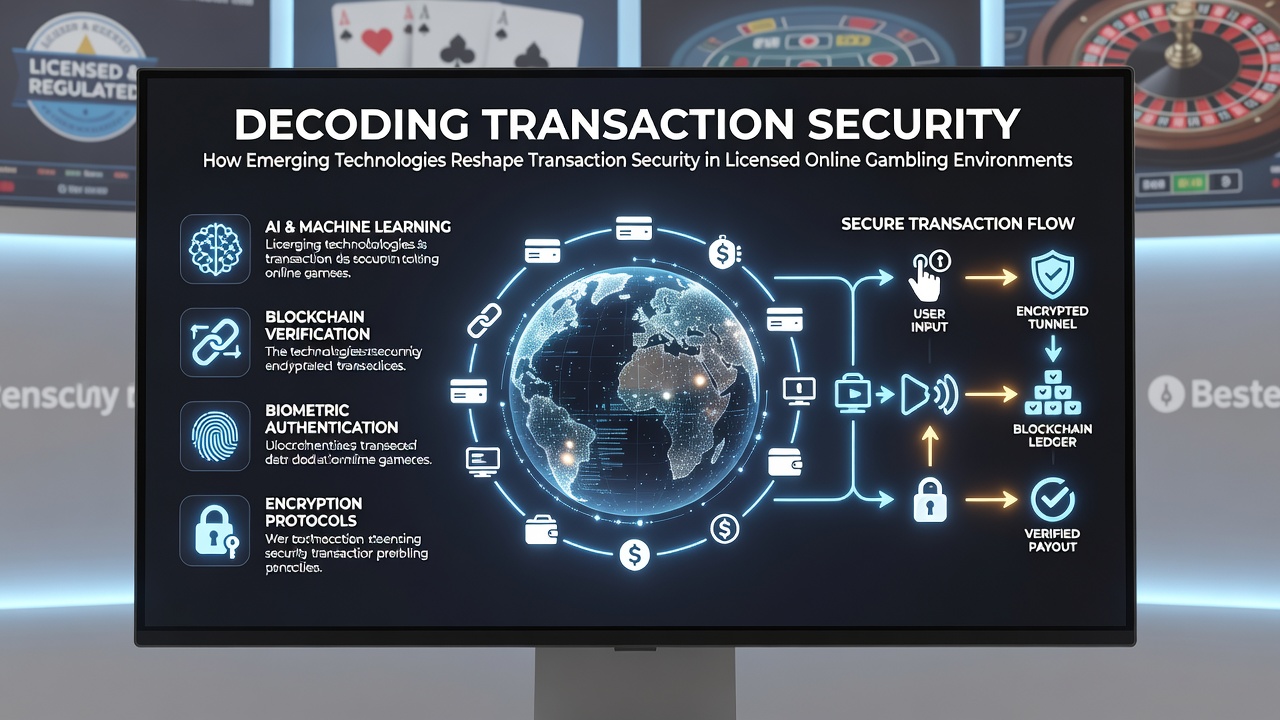
Emerging technologies continue to transform transaction security across licensed online gambling platforms, where operators integrate advanced tools to protect financial data and maintain compliance with regulatory standards. Blockchain systems, for instance, provide decentralized ledgers that record each transaction in immutable blocks, reducing the risk of tampering while enabling real-time verification between players and operators. Researchers at various academic institutions have documented how these distributed networks create transparent audit trails that regulators can review without exposing sensitive user details.
Blockchain Integration in Payment Processing
Operators in multiple jurisdictions now deploy permissioned blockchain frameworks to handle deposits and withdrawals, and this approach allows smart contracts to automate payouts once predefined conditions are met. Data from industry reports indicates that such systems cut settlement times from days to minutes in many cases, while cryptographic hashing prevents unauthorized alterations to transaction histories. What's interesting is how these ledgers also support cross-border transfers without relying on traditional banking intermediaries, which helps licensed sites serve international players more efficiently.
AI-Driven Fraud Detection Systems
Artificial intelligence models analyze patterns in betting behavior and payment flows to flag anomalies before they escalate into larger issues, and machine learning algorithms trained on historical datasets achieve higher accuracy rates than rule-based systems alone. Studies from research centers in North America and Europe show that these tools identify suspicious account activity within seconds, allowing compliance teams to intervene promptly. Operators combine AI with behavioral biometrics that track typing rhythms and device usage, creating layered defenses that adapt as new threats emerge.
Biometric and Multi-Factor Authentication Advances
Facial recognition and fingerprint scanning now supplement traditional passwords in many licensed environments, and these methods tie directly to device hardware for added protection against credential theft. According to findings from the Australian Institute of Criminology, biometric adoption correlates with measurable drops in account takeover incidents across monitored platforms. At the same time, zero-knowledge proof protocols let users confirm their identity or age without sharing full personal records, which aligns with data minimization principles favored by privacy regulations in several regions.
Preparing for Quantum Computing Challenges
Quantum-resistant encryption standards gain attention as development timelines point toward broader commercial availability around September 2026, and experts from Canadian cybersecurity agencies note that current public-key systems could face vulnerabilities once large-scale quantum machines become operational. Licensed operators therefore test post-quantum algorithms in pilot programs to safeguard long-term transaction integrity. These preparations involve updating cryptographic libraries across payment gateways while maintaining backward compatibility for existing user bases.
Regulatory Adaptation Across Regions
Government bodies in the European Union and select U.S. states require licensed entities to demonstrate how new technologies meet security benchmarks, and this oversight encourages continuous testing and third-party audits. Reports from the Nevada Gaming Control Board highlight specific metrics on encryption strength and incident response times that operators must report quarterly. Industry associations further compile anonymized breach data to identify common failure points, enabling collective improvements without compromising competitive information.
Case Examples from Licensed Markets
One operator in a regulated European market implemented a hybrid system combining blockchain settlement with AI monitoring, resulting in documented reductions in chargeback rates over successive quarters. Another platform in an Asian-Pacific jurisdiction adopted biometric login alongside token-based payments, and independent reviews confirmed compliance with local financial reporting standards. These examples illustrate how technology stacks integrate with existing licensing conditions rather than replacing them outright.
Conclusion
Transaction security in licensed online gambling continues to evolve through the combined application of blockchain, artificial intelligence, biometrics, and forward-looking cryptography. Regulatory bodies across different continents track these developments through updated guidelines and performance data, while operators refine implementations based on audit outcomes and threat intelligence. The result is an environment where security measures scale alongside technological capabilities, supported by evidence from ongoing research and operational records.